


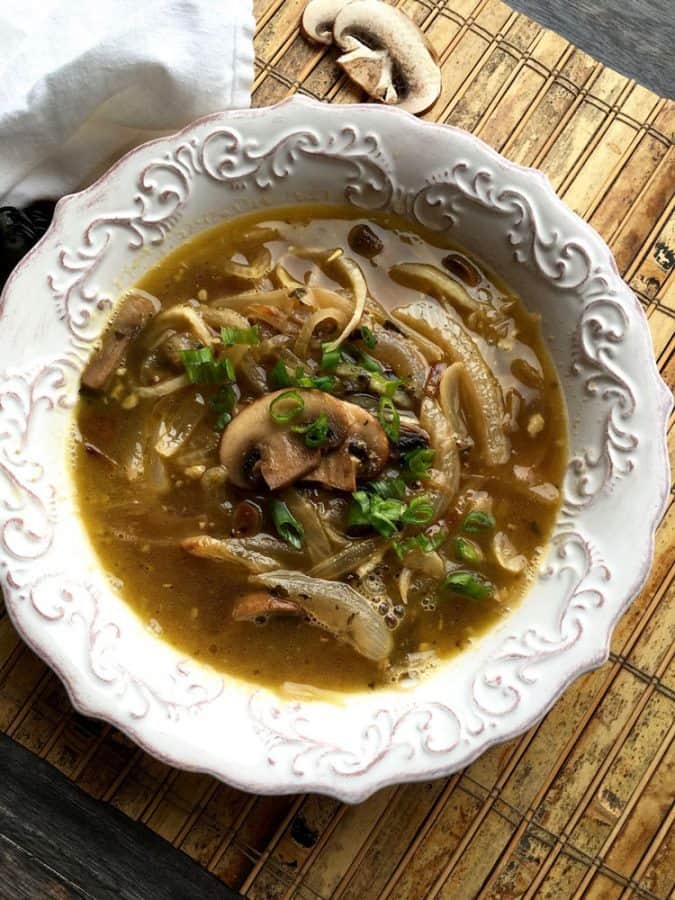
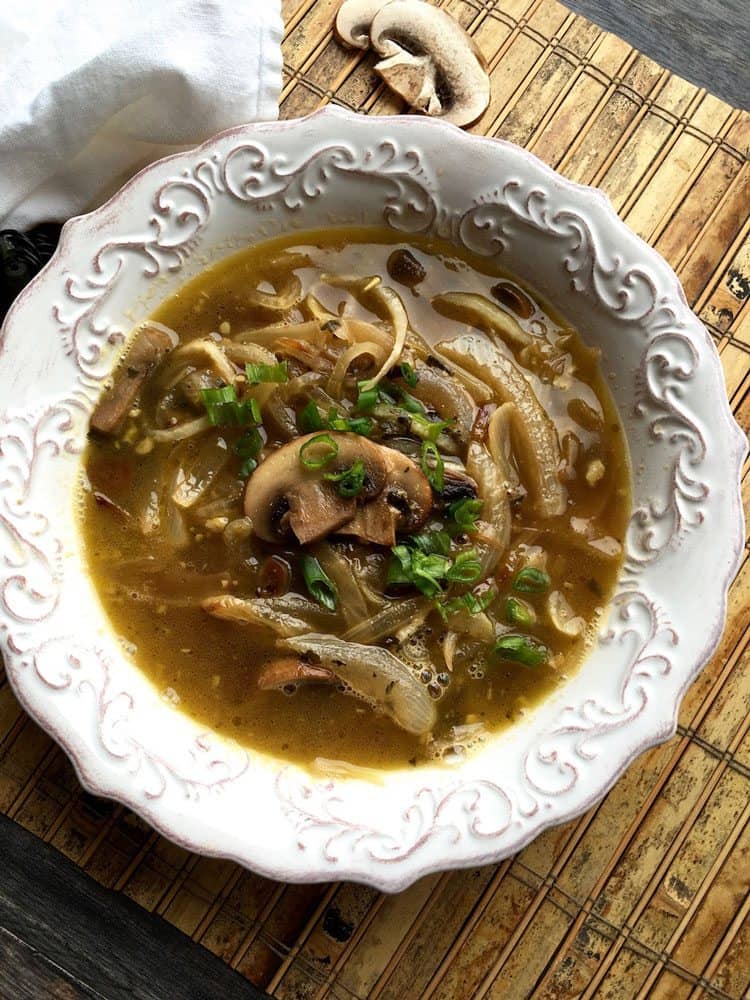
This Daikon Noodle Soup swaps regular pasta for tender, spiralized daikon noodles and floats them in a savory broth loaded with deeply caramelized onions and baby portobello mushrooms. It's light, cozy, naturally gluten-free, and a completely different kind of noodle soup from the ones you usually make.
Daikon is a large, mild winter radish that shows up all over Japanese and Korean cooking. Raw, it has a crisp, peppery bite; cooked, it turns silky and slightly sweet and soaks up whatever broth it's simmered in. Run it through a spiralizer and you get long, slurpable strands that behave a lot like ramen, which is exactly what makes this radish noodle soup so satisfying. The slow-cooked onions give the broth a rich, almost French onion depth, the mushrooms add a meaty bite, and a spoonful of pesto stirred in at the end brightens everything up.
Key Ingredients & Substitutions
- Daikon radish. Look for a firm, heavy root with smooth, unblemished skin, ideally 3 to 4 inches across so it fits on a spiralizer. You'll find it in the produce section of most grocery stores and at any Asian market. In a pinch, zucchini noodles work too, but add them in the last 2 minutes since they soften much faster than daikon noodles.
- White onions. Three small or two medium onions caramelize down into the flavor base of the soup. Yellow onions or sweet onions work just as well.
- Unsalted butter. Butter helps the onions brown evenly and adds richness. To make the soup vegan, swap in an equal amount of olive oil.
- Dry white wine. Just a splash deglazes the pan and lifts all the browned bits into the broth. Use a dry wine you'd drink, such as Sauvignon Blanc or Pinot Grigio, or replace it with extra stock.
- Baby portobello mushrooms. Also sold as cremini mushrooms. White button, shiitake, or a mix of mushrooms are all good substitutes.
- Vegetable stock. A good-quality boxed broth like Pacific Foods Organic Low Sodium Vegetable Broth keeps the flavor clean and lets you control the salt. Chicken broth also works if you don't need the soup to be vegetarian.
- Pesto. Store-bought or homemade basil pesto both work. Most pesto contains Parmesan, so choose a dairy-free pesto if you're making the soup vegan.
Helpful Tips
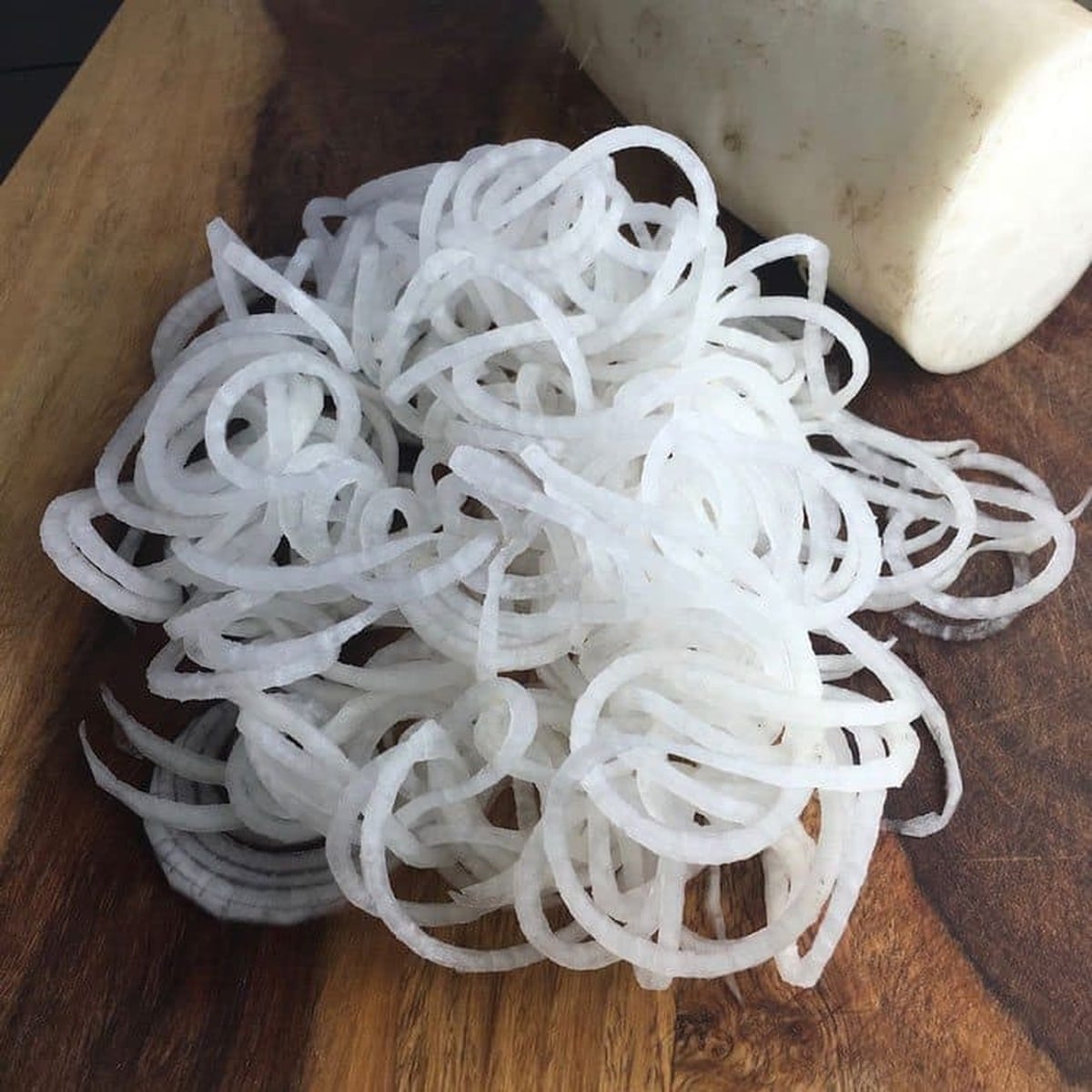
Use the right spiralizer blade. The thinnest blade on a tabletop spiralizer, such as the OXO Good Grips 3-Blade Spiralizer, gives you thin, spaghetti-like daikon noodles that cook through in minutes. Trim the strands with kitchen scissors to about 10 to 12 inches so they're easy to twirl and eat with a spoon.
Dry the noodles before cooking. Daikon holds a lot of water. Spreading the strands out on a clean kitchen towel while the onions cook keeps them from watering down the broth.
Be patient with the onions. Real caramelized onions take 45 to 50 minutes. Start them over medium heat, then turn the heat down to medium-low once they begin to soften and stir every 5 minutes or so. If they start to stick or scorch, add a tablespoon of water and scrape the bottom of the pan. Slicing them a little on the thick side also keeps them from burning.
Skip the nonstick pan. A heavy stainless steel pot or enameled Dutch oven lets the onions build up the brown bits (the fond) that give this soup its deep flavor. A nonstick pan won't develop that same color.
Don't overcook the noodles. Daikon noodles only need 5 to 6 minutes in the simmering broth to turn tender while keeping a little bite. Past that point they start to go soft and break apart.
Variations
- Miso daikon noodle soup. Skip the pesto and whisk 2 tablespoons of white miso into a ladle of warm broth, then stir it back into the pot just before serving.
- Add protein. Stir in cubed firm tofu, shredded rotisserie chicken, or a soft-boiled egg per bowl to turn it into a heartier meal.
- Ginger-garlic broth. Add 2 cloves of minced garlic and a teaspoon of grated fresh ginger along with the mushrooms, and finish with a drizzle of soy sauce and toasted sesame oil instead of pesto.
- Spicy version. Add a pinch of red pepper flakes with the mushrooms or top each bowl with chili crisp or sriracha.
- Extra greens. Wilt a couple of handfuls of baby spinach or chopped bok choy into the broth right before you add the daikon noodles.
Serving Ideas
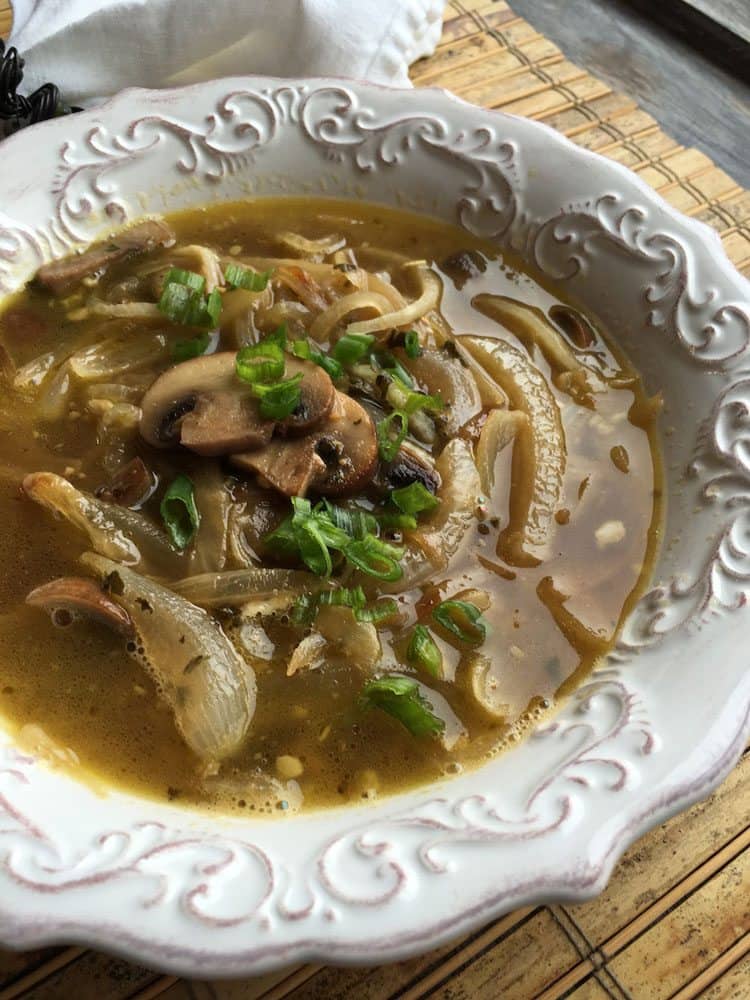
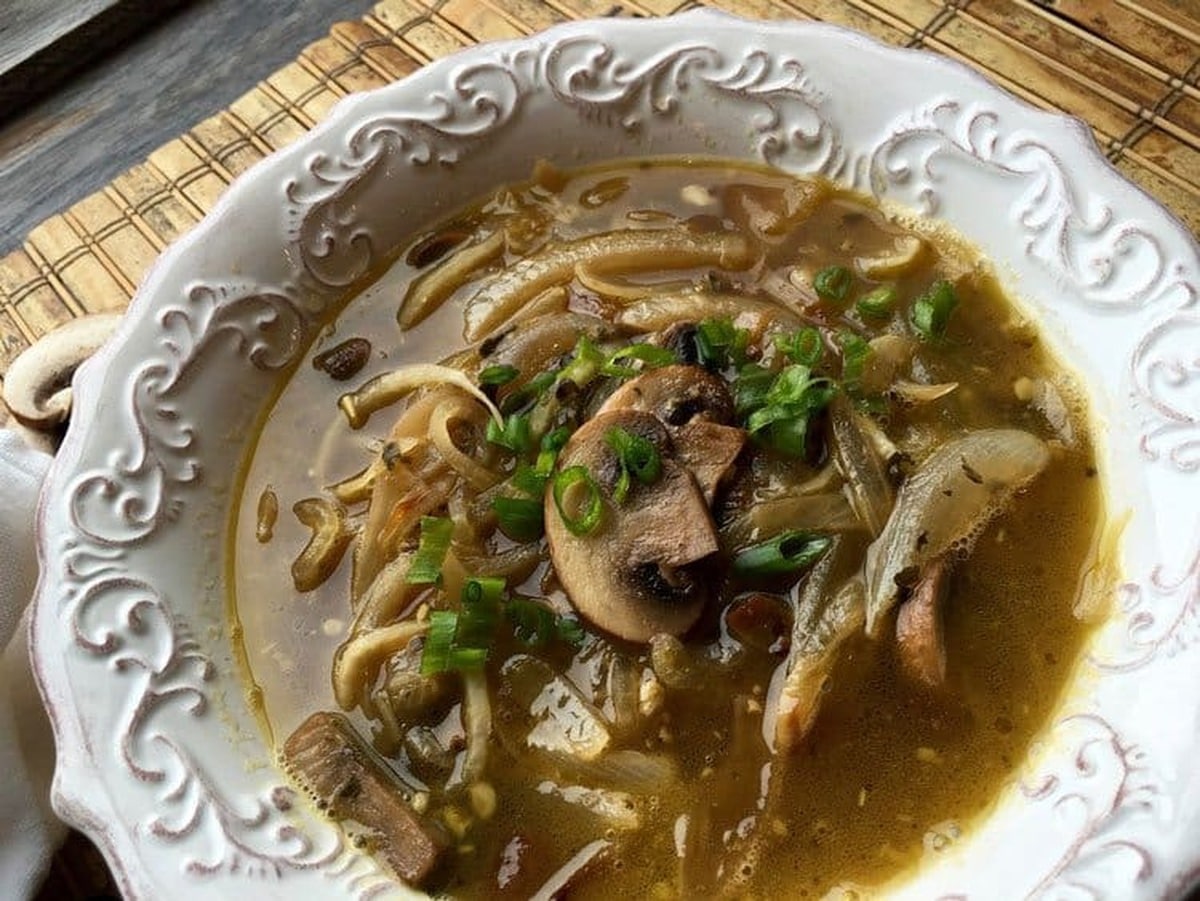
Ladle the soup into wide bowls and top with sliced green onions. A few extra sautéed mushrooms, a soft-boiled egg, or a sprinkle of toasted sesame seeds make it look restaurant-worthy with almost no effort.
For a light lunch, this daikon noodle soup is plenty on its own. For dinner, pair it with cauliflower fried rice or a side of homemade cabbage kimchi. If you love the flavor of slow-cooked onions, it also makes a fun lighter alternative to a classic French onion soup.
Storing & Freezing
Store leftovers in an airtight container in the refrigerator for up to 4 days. The daikon noodles will keep softening as they sit, so if you plan to have leftovers, store the broth and noodles separately when you can. Reheat gently on the stove over medium-low heat just until hot, and add a splash of stock if the broth has reduced.
The broth with the onions and mushrooms freezes well for up to 3 months. Thaw it overnight in the refrigerator, bring it to a simmer, and then add freshly spiralized daikon noodles. We don't recommend freezing the cooked noodles themselves, because they turn watery and mushy once thawed.
More Soups
If you loved this recipe, here are a few more soups you might enjoy:
- Easy Chicken Ramen
- Creamy Carrot Soup with Warming Spices
- Roasted Cauliflower Rice and Tomato Parmesan Soup
- Copycat Olive Garden Zuppa Toscana Soup
Recipe

Daikon Noodle Soup
Equipment
- Dutch Oven or large heavy-bottomed pot
Ingredients
- 1 large daikon radish about 1½ pounds, 3 to 4 inches in diameter
- 3 small white onions or 2 medium
- 3 tablespoons unsalted butter or olive oil for a vegan soup
- 3 tablespoons dry white wine or more vegetable stock
- salt and pepper to taste
- 8 ounces baby Portobello mushrooms cut into thin slices
- 32 ounces vegetable stock (4 cups), low-sodium
- ¼ cup fresh pesto store-bought or homemade (use dairy-free pesto for vegan)
Garnish: (optional)
- 3 green onions green parts only, finely sliced
Instructions
- Peel the daikon with a vegetable peeler. Using the smallest (thinnest) blade on a spiralizer, spiralize the root into long, thin, spaghetti-like strands. Trim the strands with kitchen scissors to about 10 to 12 inches long. Spread them out on a clean kitchen towel or paper towels to absorb excess moisture and set aside.
- Slice off the ends of each onion and remove the papery outer layers. Cut each onion in half from root to tip, then cut each half across the middle and slice lengthwise into long strips. Don't cut the onions too thin, or they may burn while cooking.
- Melt the butter in a Dutch oven or large, heavy-bottomed pot over medium heat (avoid nonstick, which won't brown the onions well). Add the onions and stir until coated with butter.
- Cook the onions for 45 to 50 minutes, stirring every 5 minutes or so. Once they begin to soften and color, reduce the heat to medium-low so they caramelize slowly without scorching. If they start to stick, add a tablespoon of water and scrape the bottom of the pot. Cooking time will vary with the age of the onions and how many you cook at once.
- When the onions are a deep golden brown, add the white wine and scrape up all the browned bits from the bottom of the pot, adding a little more liquid if needed. Season the onions with salt and pepper.
- Add the sliced mushrooms and sauté until tender, about 5 minutes. Stir in the vegetable stock and pesto and simmer over medium-low heat for 10 to 15 minutes to let the flavors blend.
- Increase the heat to medium, add the daikon noodles, and simmer for 5 to 6 minutes, just until tender. Taste and season with more salt and pepper as needed.
- Ladle the soup into bowls, garnish with sliced green onions, and serve immediately.
Nutrition
Nutrition details are an estimate, per serving.


Karen Goad says
that sounds good I will need to look and see if they have that kind of radish root here, I have never bought it. I have thought of getting the spiral noodle cutter