

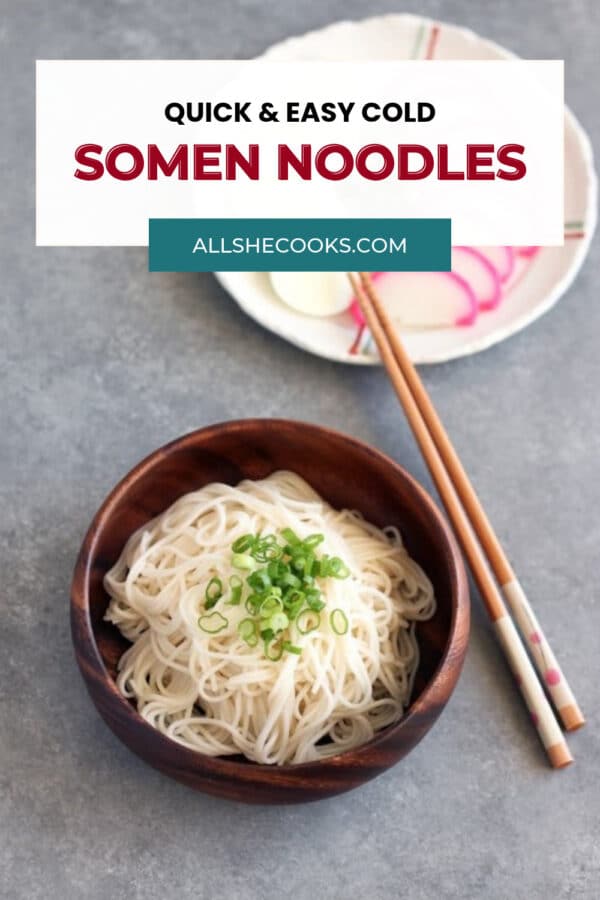

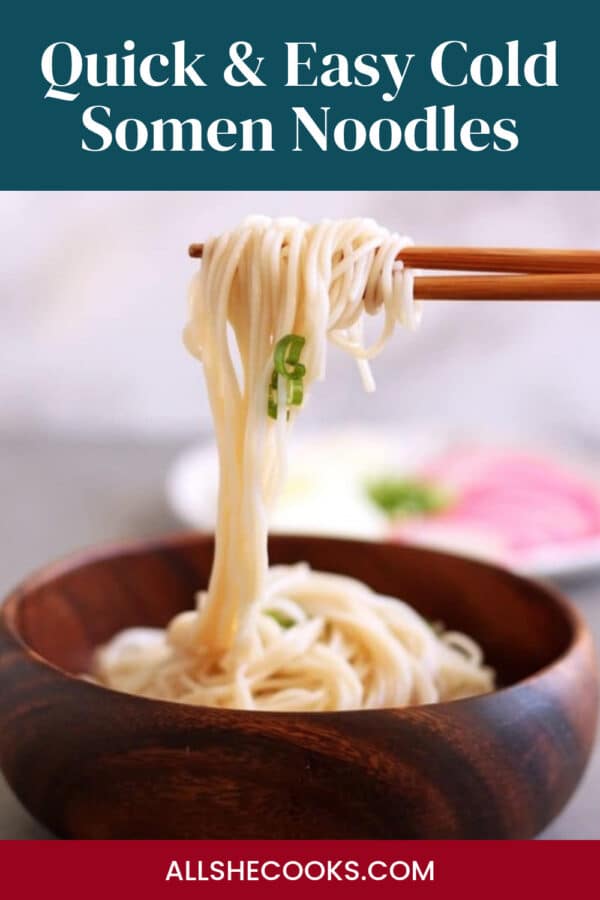
Somen are thin Japanese wheat noodles, traditionally served cold with a dipping sauce. Cold somen noodles make a quick and easy meal during hot summer days, when all you want to do is sit in front of a fan rather than stand in front of a stove!

Before you delve into this recipe, I have a confession to make. The way this recipe is written is how we (my husband and I) eat somen at home, and in no way do I claim this to be an authentic Japanese recipe.
There is still some cooking required for this easy noodle dish, but I will try to limit your standing-in-front-of-a-stove time to a minimum of boiling eggs and cooking the dry noodles. The noodles cook in about 2 to 3 minutes, the toppings are mostly slicing, and the somen sauce comes straight from a bottle (or from your fridge, if you make your own ahead).
Key Ingredients & Substitutions
This Japanese-inspired recipe does call for a few unusual ingredients. But trust me, they are really worth the effort.
- Dry somen noodles. Just like pasta, somen noodles come dried. (I use these noodles.) They are very thin, delicate, white, round noodles. One package usually holds several bundles tied with a paper band, with cooking instructions on the back. Some brands do have English instructions. In a pinch, angel hair pasta or thin rice vermicelli will work, but the texture won't be quite as silky.
- Somen noodle soup base (somen sauce). This is the dipping sauce for your noodles, also called tsuyu. You can buy a straight, ready-to-use sauce like this Shirakiku somen soup base, which you can use directly for dipping or to dress your noodles. There is also a concentrated version, like Kikkoman Hon Tsuyu, which needs to be diluted with water following the label. If any of the sauce is too salty for your taste, just add a splash of water. Keep it in the fridge once it's open.
- Kamaboko. This is Japanese fish cake, and it comes in many different forms and shapes. I usually buy the classic pink-and-white kind on a little wooden board, which I also add to other recipes such as ramen noodles, hot pot and fried Asian noodles. Imitation crab or thin slices of cooked shrimp are good swaps.
- Eggs. Thin slices of hard boiled eggs add protein and make this feel like a real meal.
- Green onions. Slice them as thin as you can. They add a fresh, mild bite to every mouthful.
I tend to order the noodles and soup base online. But you should also be able to find all three of the special ingredients in a Chinese grocery store such as 99 Ranch, a Korean supermarket such as H-Mart, or any Japanese market such as Marukai, Mitsuwa or Nijiya. Kamaboko is kept in the refrigerated section.

How to Make Somen Sauce at Home
No soup base on hand? Homemade somen sauce is super simple. Stir together 1 cup water and 1 teaspoon dashi granules, then add ¼ cup soy sauce, ¼ cup mirin and 1 teaspoon sugar. Bring it to a simmer in a small saucepan for about 2 minutes, then let it cool and chill it in the fridge.
That makes about 1 ½ cups, which is plenty for four bowls of cold somen noodles. It keeps in a jar in the fridge for up to 1 week, so it's easy to make ahead.
Helpful Tips
Don't walk away from the pot. Somen noodles are so thin that they go from perfect to mushy in under a minute. Start checking at 2 minutes, and follow the package time if your brand gives one.
Rinse, then chill. Drain the noodles and rinse them under cold running water, gently rubbing them with your hands to wash off the extra starch. Then let them sit in an ice bath until you're ready to eat. This keeps them from turning sticky and gives them that lovely cool, slippery texture.
Skip the salt in the cooking water. Most dry somen already has salt in the dough, and the soup base is salty too.
Prep your toppings first. Slice the kamaboko, eggs and green onions while the egg water comes to a boil. The noodles should be the very last thing you cook, so they go straight from the ice bath to the bowl.
The sauce is not a broth. Somen sauce is for dipping or drizzling, so don't dump the entire bottle into your noodle bowl! Pour a little at a time, or serve it in small cups and dip each bite.

Variations
- Classic dipping style. Pile the noodles on a plate and serve the chilled somen sauce in small cups with grated ginger, a dab of wasabi and extra green onion to stir in.
- Sesame dipping sauce. Whisk a spoonful of tahini or Japanese sesame paste and a few drops of sesame oil into the somen sauce for a nutty, creamy version.
- Spicy somen. Add a drizzle of chili oil or a pinch of red pepper flakes to the sauce if you like a little heat.
- Tofu instead of fish cake. I like medium-firm tofu because it is easy to slice. Cut it into thin slices, top with green onion and a little soy sauce, and serve it cold.
- Shrimp or chicken. Top the noodles with chilled cooked shrimp or shredded leftover chicken for an even heartier bowl.
- Warm somen. In cooler weather, serve the noodles in hot broth instead. In Japan this is called nyumen.
Serving Ideas
This meal is not meant to be fancy. At all. A few easy toppings make it feel complete, though. I like to buy roasted seaweed snack packs to serve alongside or crumble over the somen noodles. They are usually roasted in sesame or grapeseed oil and lightly salted. These are not the large sheets for making sushi rolls.
Sliced cucumbers are a clever way to add some fresh green veggies to your meal, and they make a refreshing side dish during summer. To add even more veggies, you could sauté bok choy or your choice of greens with a bit of garlic, let them cool, and serve them cold with the noodles. Skip this if you want to keep cooking time to an absolute minimum. Instead of hard boiled eggs, you could also scramble an egg, fry it into a thin sheet and cut it into strips. Any other vegetable or meat left over in your fridge can go on top of your noodles, too!
For a bigger spread, pair your bowls with crispy homemade egg rolls, edamame or a plate of honey sesame chicken.

Storing & Freezing
Cold somen noodles are best eaten right after they come out of the ice bath. If you have leftovers, toss the drained noodles with a few drops of oil so they don't stick together and refrigerate them in an airtight container for up to 1 day. Store the toppings separately (sliced eggs and kamaboko keep for 2 to 3 days), and keep the somen sauce in its bottle or jar in the fridge. Before serving, rinse the noodles under cold water to loosen them up.
Cooked somen doesn't freeze well. The thin noodles turn soft and break apart when they thaw. Since they only take a couple of minutes to cook, it's much better to cook just what you need. Homemade somen sauce, on the other hand, freezes nicely in an ice cube tray for up to 3 months.
Somen Noodles FAQ
What are somen noodles?
Somen are very thin, white Japanese noodles made from wheat flour, water and salt. The dough is stretched into fine strands (often with a little oil) and dried, so they look a bit like angel hair pasta. They cook in just a few minutes and are a classic summer food in Japan, usually served ice cold with a dipping sauce.
What's the difference between somen, udon and soba?
All three are Japanese noodles. Somen and udon are both made from wheat, but somen are super thin while udon are thick and chewy. Soba are made with buckwheat flour, so they're brownish and have a nuttier flavor.
What is somen sauce made of?
Somen sauce (tsuyu) is a mix of dashi, soy sauce and mirin, sometimes with a little sugar. It's savory, slightly sweet and full of umami. You can buy it bottled or make your own with the easy recipe above.
Are somen noodles served hot or cold?
Both! They are most famous as a cold dish, but you can also serve them in hot broth like a noodle soup.
Are somen noodles gluten-free?
No. Somen are made from wheat flour, so they contain gluten. For a gluten-free bowl, use thin rice noodles and a gluten-free soy sauce or tamari in your sauce.

More Asian Noodle Recipes
I hope this gives you a starting point for delving into the delicious world of somen noodles. And if you love these noodles, be sure to give these other tasty Asian-inspired noodle recipes a try:
Recipe
Quick & Easy Cold Somen Noodles
Ingredients
- 4 bundles dry somen noodles about 7 oz (200 g) total
- 1 ½ cups somen noodle soup base (tsuyu) ready-to-use, chilled, or homemade somen sauce (see notes)
- 1 package red kamaboko (Japanese fish cake) about 6 oz (170 g)
- 4 eggs
- 2 green onions thinly sliced
- optional toppings roasted seaweed snacks, sliced cucumber, tofu
Instructions
- Place the eggs in a medium saucepan and add cold water to cover by about 1 inch. Bring to a boil over high heat, then reduce the heat to medium and boil for 9 to 10 minutes. Immediately transfer the eggs to an ice bath to cool.
- While the eggs cook, slice the green onions thinly. Peel the kamaboko off its wooden board with a knife and cut it into thin slices.
- Bring 3 quarts of water to a boil in a large pot (no salt needed). Add the somen noodles and cook for 2 to 3 minutes, or according to the package, stirring gently with chopsticks so they don't stick together.
- Drain the noodles in a colander and rinse well under cold running water, rubbing them gently to wash off the extra starch. Transfer the noodles to an ice bath to chill, then drain well just before serving.
- Peel the eggs and cut them into thin slices with an egg slicer or a sharp knife.
- Divide the noodles among 4 bowls and top with the kamaboko, egg and green onion, plus any other toppings you like. Drizzle with a little chilled somen sauce, or serve the sauce in small cups for dipping. Enjoy cold.
Notes
Nutrition
Nutrition details are an estimate, per serving.


Leave a Comment