
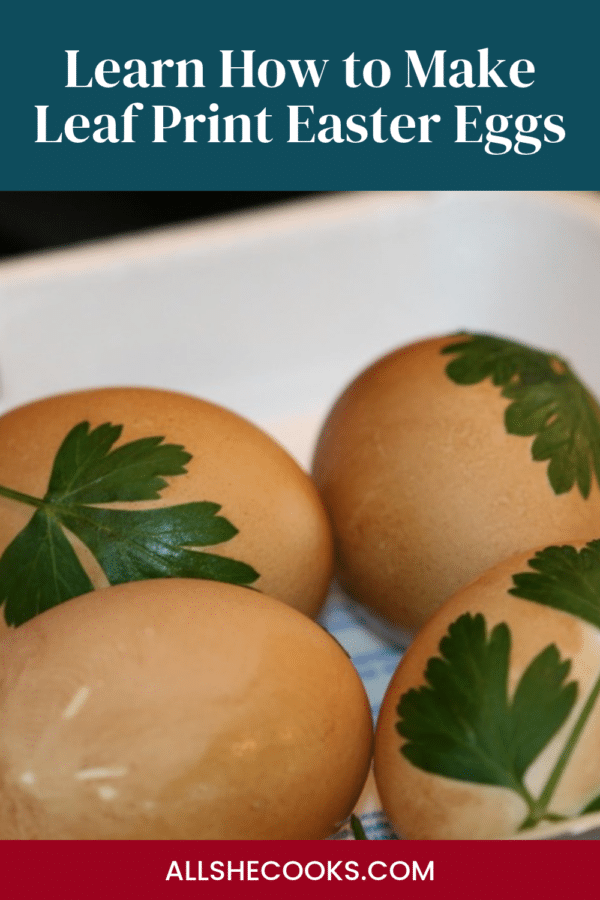
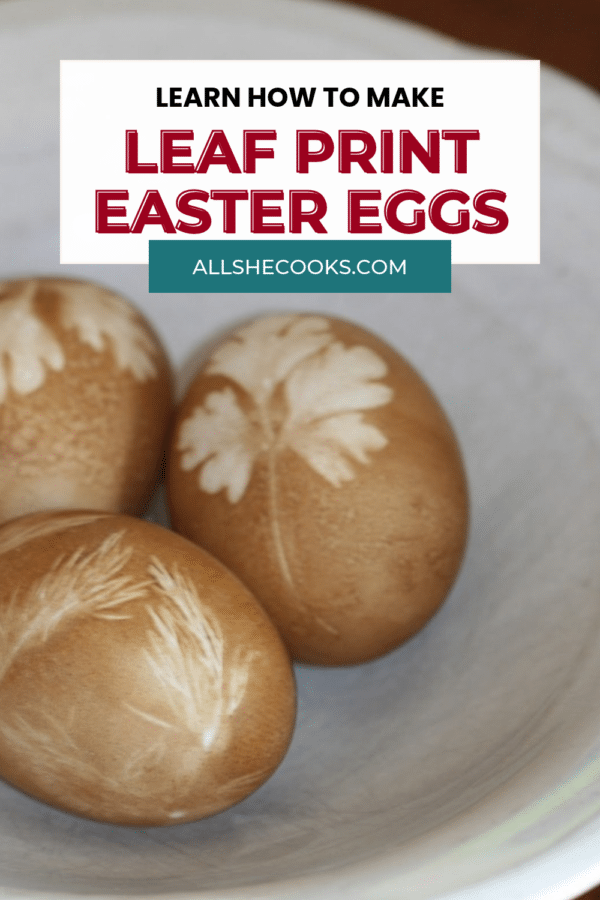
These leaf print Easter eggs are one of my favorite ways to decorate eggs, and they're so much simpler than they look! A pretty herb leaf, a scrap of pantyhose and a cup of strong coffee are really all it takes to get those soft, vintage-looking prints.
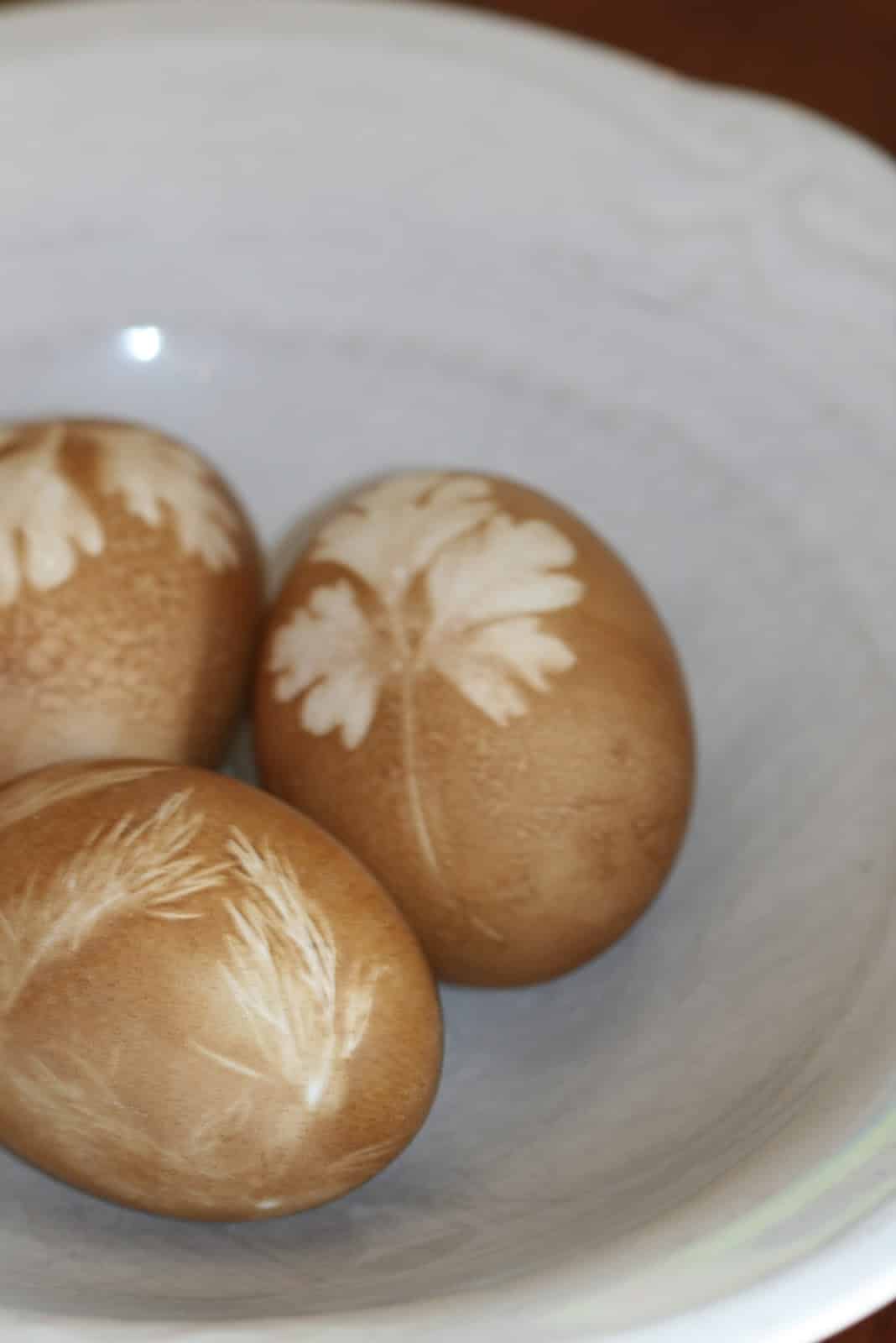
I first tried these after spotting a leaf print tutorial online. There wasn't a speck of green outside yet, so I used store-bought herbs. Honestly, the hardest part was picking out the leaves! We used parsley and dill for these eggs, and I'm already planning another batch with different leaves and colors.
I dyed these eggs in coffee. I'd been buying store-bought dye kits for years and never knew I could color eggs without one. The coffee gives the shells a warm, earthy brown that makes the white leaf shapes really pop.
Supplies You'll Need
- White eggs. Hard-boil them and let them cool first. (Need a refresher? Here's the easiest way to make boiled eggs.) White shells show the print best, since brown eggs barely change color in coffee.
- Small, flat leaves. Flat-leaf parsley, dill, cilantro, carrot tops, clover and tiny ferns all work. Soft, fresh leaves press flatter than stiff or curly ones.
- Pantyhose or knee-highs. Cut them into pieces big enough to wrap all the way around an egg. A light, sheer color makes it easier to see the leaf while you wrap.
- Twist ties. These cinch the pantyhose closed. A needle and thread works too.
- Coffee dye. For each cup of dye, you'll need 1 cup of strong brewed coffee and 2 teaspoons of white vinegar. Make as many cups as you need to cover your eggs.
- A cup or bowl and a wire rack. The cup should be deep enough to cover the eggs completely. Line the rack with paper towels for drying.
How to Make Leaf Print Easter Eggs
- Make the dye. Stir the vinegar into the coffee and let it cool to room temperature.
- Place the leaf. Dip a leaf in water and press it flat against the egg, smoothing the edges down with your finger.
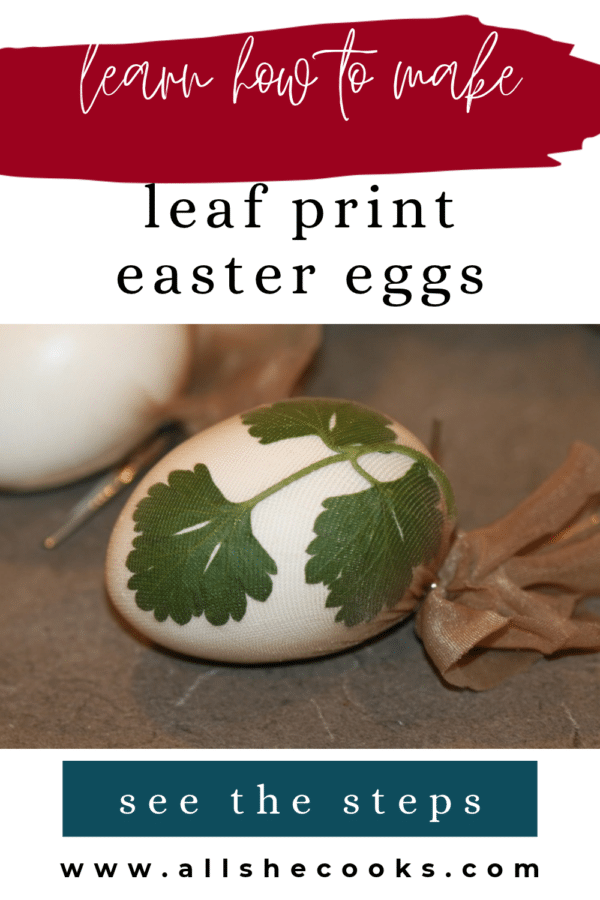
- Wrap it snug. Stretch a piece of pantyhose tightly over the egg so the leaf is pressed flat. Gather the ends at the back and secure them with a twist tie, or sew them closed. The leaf should sit snug against the shell so no dye can leak under it.
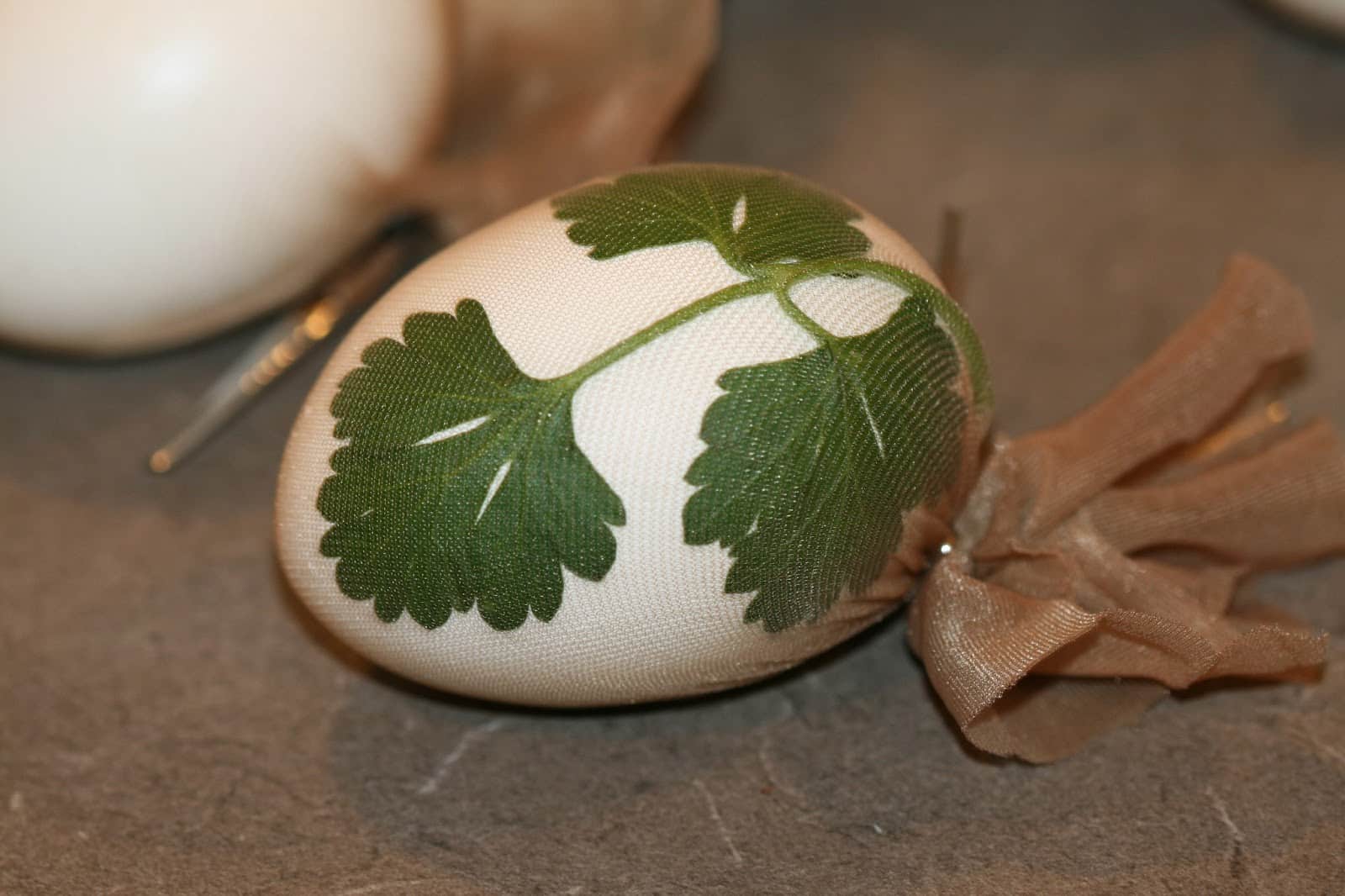
- Dye the eggs. Submerge the wrapped eggs in the coffee and let them sit for at least 10 minutes. The longer they sit, the darker the color will be. I let mine sit for a couple of hours.
- Let them dry. Lift the eggs out and set them on the paper towel-lined wire rack to drip dry for a few hours.
- Unwrap. Take the pantyhose off. If the egg is still wet, let it dry a little longer. Then peel off the leaf to reveal the print!
If you plan to eat your eggs, do the soaking and drying in the refrigerator (more on that below).
Helpful Tips
Pick flat, delicate leaves. Parsley and dill worked great for me because they lie nice and flat. Thick or curly leaves leave gaps, and the dye sneaks in under them, so the print comes out blurry.
Get the leaf a little wet. A damp leaf clings to the shell, which makes it so much easier to hold in place while you wrap it.
Pull the pantyhose tight. This is the step that makes or breaks the print. Smooth out any wrinkles over the leaf before you tie it off, because every loose spot lets coffee in.
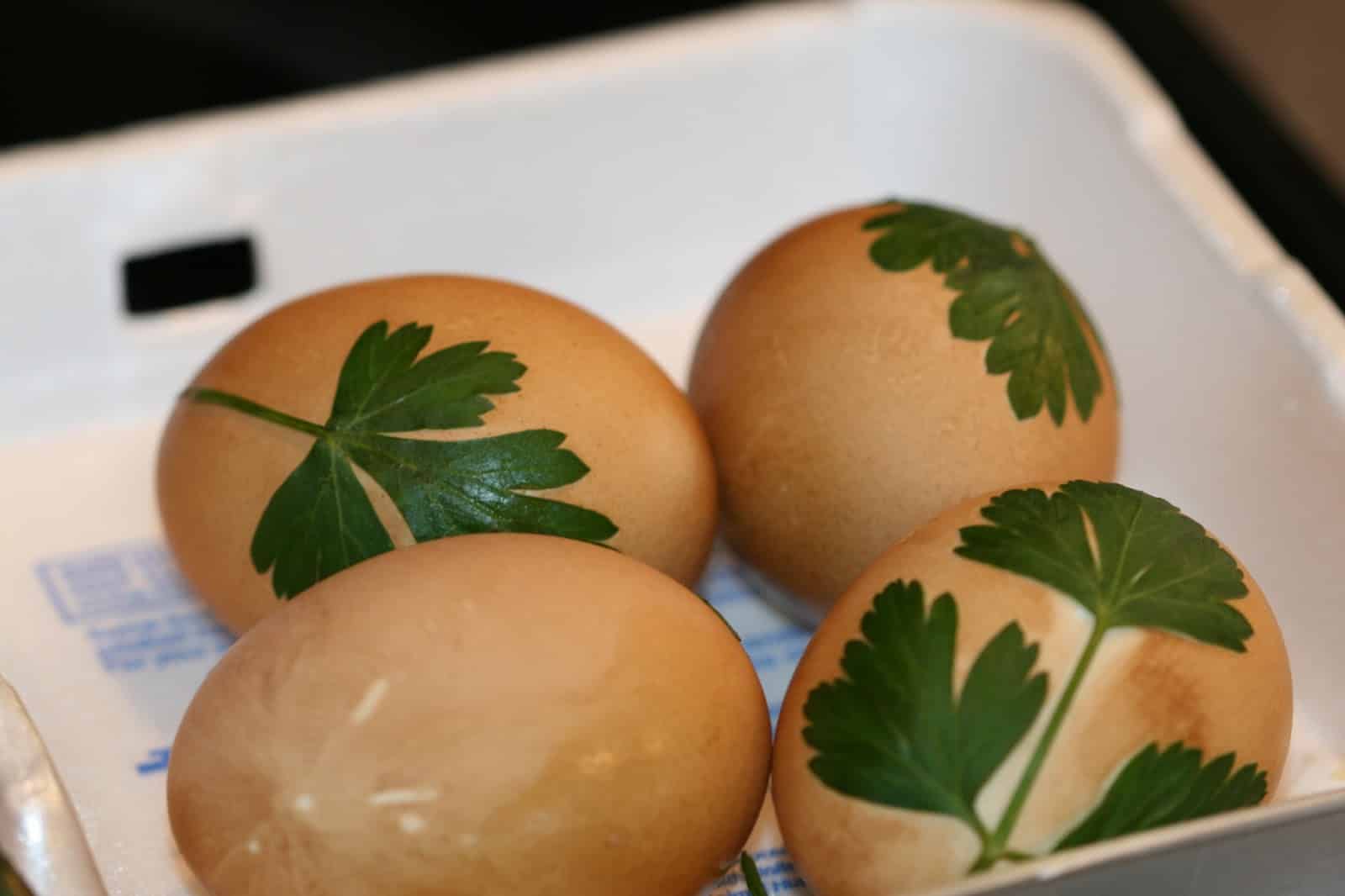
Be patient with the color. Ten minutes gives you a light tan. A couple of hours gives a nice golden brown. Next time I'll leave some overnight in the fridge for a really deep color that contrasts even more with the leaf.
Let them dry before unwrapping. Pulling wet pantyhose off can smudge the edges of the print. Give the eggs a few hours on the rack and you'll get much crisper leaf shapes.
Do a test egg first. Every leaf prints a little differently, so try one egg before you wrap the whole dozen. It's a quick way to see which leaves you like best.
Fun Variations
- Onion skin eggs. Simmer the papery skins from a few yellow onions in water with a splash of vinegar, strain it, and use it just like the coffee. You'll get a gorgeous rusty orange.
- Red cabbage blue. Chopped red cabbage simmered in water makes a dye that turns white eggs a pretty blue. It needs a long soak, so leave the eggs in it overnight in the fridge.
- Turmeric yellow. A couple of tablespoons of ground turmeric stirred into hot water with a little vinegar gives you sunny yellow eggs.
- Bright store-bought colors. The same leaf-and-pantyhose trick works with a regular egg dye kit if you want bolder colors.
- Flowers and shapes. Small flat flowers and clover make sweet prints too. For even more ideas, check out my creative Easter egg decorating ideas.
Can You Eat Leaf Print Eggs?
Yes, as long as you treat them like any other hard-boiled egg. Keep them in the refrigerator during the soaking and drying, since hard-boiled eggs you plan to eat shouldn't sit out for more than two hours. Stored in the fridge, they're good for about a week.
My leaf print eggs were strictly for decoration, so they sat out on display. If yours sit out for more than two hours, enjoy them as decorations and don't eat them afterward.
They look so pretty in a bowl on the Easter table, and they'd be right at home at brunch next to a batch of banana muffins. If you kept your eggs in the fridge, the leftovers make great deviled eggs after the holiday.

More Easter Ideas
Getting ready for Easter? Here are a few more ideas you might enjoy:




Cara says
Stopping by from Mom's Monday Mingle. This is such a great idea. I can't wait to try it with my boys this Easter.
Jessica says
It's so much fun to try a new way to decorate eggs. I boiled some more today and need to dream up a new way to decorate. 😉 Have fun!
Carolyn says
these are beautiful. Thanks for sharing!
Jessica says
Thanks Carolyn. Glad you enjoyed them.